- Participation in Life
- Coordination
Program for Learning Coordination
November 3, 2023
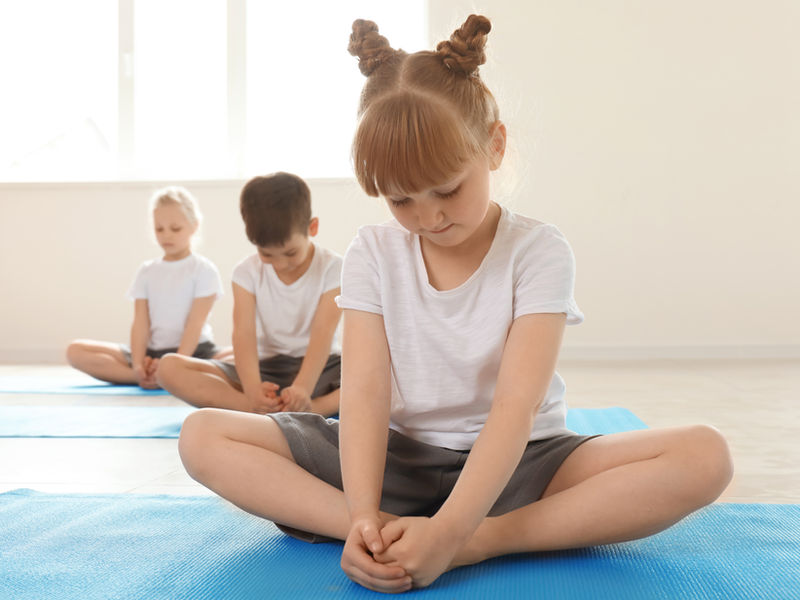
Coordination is the ability to follow along with another person. It is a crucial skill that goes beyond mere imitation, to focus on following sequences of movements and matching the pace and timing of actions. Coordination is an essential skill of life. In school, children coordinate as they line up to go to lunch. They coordinate to play tag with friends during recess. They coordinate as they say the pledge in class. At home, a child must coordinate with siblings or the parent to go to the car. He coordinates with his sibling to play a chase game or to carry a game up from the basement. In the community, the child coordinates with his parents to walk through a store, along the sidewalk or across the street. Without the ability to assume the ability to coordinate his actions with others, a child must be told where to go or how to move. More likely, he will need his hand held as without that support, he will wander away.
Coordination Activity Guidelines
For coordination activities, you may use two sets of materials. For example, if the adult is guiding the child to make chocolate milk, both the adult and the child will have a cup, milk, chocolate powder and a spoon in line in front of them. At the beginning stages of learning, the items would be placed in sequence. The adult would take an action and the child would do the same across each of the steps in the sequence of materials.
You could also use materials that are large enough so that both individuals can manipulate the material together. For example, the two participants can carry a large tray or a big box. Each of the participants would need to uphold his end of the item. If the child forgets to hold up his side of the tray, the items would slide off!
The programming of the activities would move through various phases: face to face, side by side, sequenced to non sequenced, across different distances.
The programming would gradually increase in complexity by incorporating more movement, increasing the distance between the two people, changing the setting, and involving another person (such as moving along with a peer as well as the guide).
When choosing the actions for coordination activities, the actions or skills are selected for which the child is already competent so that assistance is not required to perform the action.
Pace can be altered just for fun. For example, dancing slowly or quickly. On the other hand, changes in pace can also be used to help the child understand dynamic components of a situation. For example, being able to move quickly if carrying an empty glass but very slowly if the glass were filled to the brim with liquid.
The manner of movement can be altered, e.g. marching, tiptoeing, jumping, etc. The manner can be changed for fun and to help keep the child engaged in the task.
When doing an activity, the child and the adult could coordinate their actions to gather materials needed for the task. For example, they could run together to pick up flour and sugar. They could walk together to get milk and vanilla. They could march to get the bowl and the spoon. In this way, the adult is acting as a guide before they even sit down to do the task.
Coordination is a skill that needs to be developed robustly so that it can become a useful skill for the child across life settings.